EA897evo Technology
In 2014, a revised version of the 3.0 TDI engine was introduced. The output of the base version was increased from 150 kW to 160 kW, and the high-performance version from 180 kW to 200 kW. The geometric compression ratio was reduced to 16.0:1. The cylinder block is produced in sand casting from GJV-450 and is 1.1 kg lighter compared to its predecessor. The engine features a GTD 2060 VZ exhaust gas turbocharger with electromechanical VTG control.
Significant changes relate to the exhaust gas aftertreatment to meet Euro 6 emission standards. The chain drive was revised — a second chain exclusively drives the high-pressure pump, and a third chain at the front drives the new fully variable oil pump and the vacuum pump.
⚠ Critical Note
Camshaft problems are increasingly appearing with CRTD engine code, even at low mileage well below 100,000 km, with increased wear on the tooth flank. In some cases, connecting rod bearing failures have also been reported.
Engine Defects — A Timeline
The 3.0 TDI engines were introduced in Volkswagen, Audi, and Porsche vehicles in 2004. The first generation (EA896) proved to be among the least problematic engines in the VAG group. In the following years, the EA897 (2010) generation appeared — also relatively reliable.
In 2014, the modified EA897 evo variants were released. Changes were aimed at reducing emissions to meet EU standards. Unfortunately in practice, these changes had a very negative impact on engine longevity.
Some defects, such as knocking camshafts and rattling oil pumps, manifest after just a few thousand kilometers and are repaired under warranty. If the owner did not report the fault before the warranty expired, they must then pay for repairs themselves.
EA896 — Reliable generation
EA897 — Improvements, still reliable
EA897 evo — Critical oil pressure problem introduced
VW partial correction — still insufficient
Why Engines Fail
During operation, all cooperating elements inside the engine must be properly lubricated. Proper lubrication means the oil precisely fills the gaps between moving engine parts that work together. To achieve this, oil must be delivered under appropriate pressure.
If parts come into contact without the mediation of properly pressurized oil, the overheating process begins. Once this process starts, it intensifies rapidly. After intense heating, parts melt into a single mass — a catastrophic and irreversible failure.
Root Causes
- Insufficient oil pressure — the primary cause in EA897evo engines
- Inappropriate oil quality caused by dilution with fuel
- Damaged injectors cause unburned fuel to leak past piston walls and enter the crankcase
Engine Seizure — What It Means
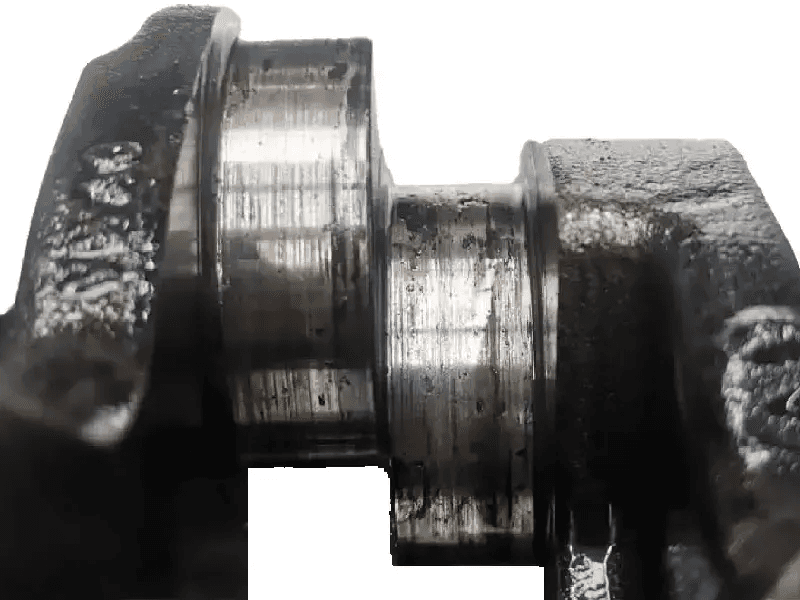
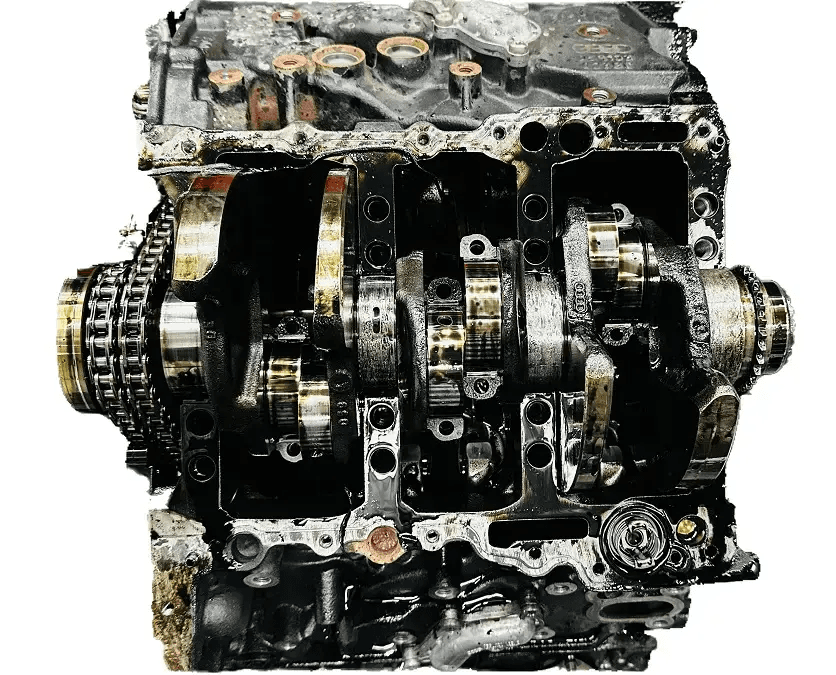
Seizure can affect almost any engine — even those with low mileage running normally until the last moment. In 3.0 TDI EA897evo engines, it is typically the crankshaft that welds itself and can no longer rotate.
When the engine works correctly, moving parts are adequately lubricated: the piston does not contact the cylinder wall directly, the crankshaft does not touch the bearing shell. Between these components there is a thin film of oil that reduces friction.
If this film disappears and parts come into direct contact without lubricant, even microscopic irregularities cause a sharp increase in friction. Up to 95% of mechanical energy converts into heat — a state called dry friction. The more components heat up, the more they expand, displacing remaining oil film.
Even if the lack of lubrication was temporary, after sudden heating the oil may no longer reduce friction. In extreme cases, so much heat is generated that the crankshaft components melt into a single mass. A seized engine, once cooled, may start again — but will never be suitable for normal use, and each subsequent start causes even more damage.
How to Prevent Engine Seizure
Monitor the condition of your engine oil regularly. If the oil level rises instead of dropping, it means fuel is mixing with the oil — an urgent warning sign.
If you notice rising oil levels, go to a service center immediately to identify and fix the cause and change the oil before any further driving.
Save Your 3.0 TDI Engine
⚠ If you own a Volkswagen or Audi 3.0 TDI manufactured after 2013, you have a ticking time bomb under the hood. The reason is too low oil pressure.
- Low oil pressure is the main cause of failures in EA897evo engines
- The problem affects all Volkswagen Touareg and Audi A4, A5, A6, A7, A8, Q5, Q7, Q8 with 3.0 TDI V6 EA897evo
- Hundreds of thousands of vehicles manufactured after 2013 are affected
- Only in March 2020 did the VW Group change engine settings to increase oil pressure — but still not enough
- Besides low oil pressure, fuel dilution of engine oil can also cause engine damage
Why Oil Pressure Is Too Low
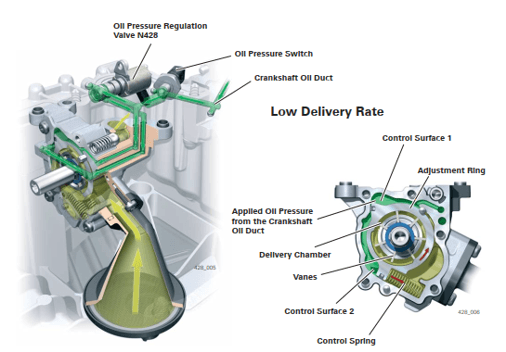
The reduction of oil pressure at low engine speeds was intended to reduce the energy required to generate that pressure. A variable capacity oil pump controlled by the engine computer achieves this reduction.
Less energy consumed by the oil pump was supposed to translate into improved emissions. This entire solution was introduced in EA897 to meet EURO 6 emission standards.
The engine control computer receives data from an oil pressure sensor and controls a solenoid valve to achieve values recorded in the map, which determines oil pressure based on temperature and engine speed. Too low oil pressure leads to engine and turbocharger destruction.
Volkswagens and Audis with variable output oil pumps, in which engines seized after tens of thousands of kilometers, come to our workshop. These engines are often so badly damaged that repair is not cost-effective — usually the engine is replaced with a brand new one.
Increasing Oil Pressure
If you own an Audi or Volkswagen 3.0 TDI manufactured after 2013, your car most likely has an EA897evo engine with a variable capacity oil pump and reduced oil pressure.
- 1Check if your car has such an engine — read the engine code from the registration certificate
- 2If you have the EA897evo engine and no one has corrected the oil pressure settings, your engine is certainly at risk
- 3Check your current oil pressure with any diagnostic tester
- 4Record a pressure log and send it to us
- 5We will perform the ECU recalibration to correct oil pressure to safe levels
Understanding Oil Pressure Values
The graph shows oil pressure depending on engine speed. The horizontal axis represents engine speed in RPM; the vertical axis shows oil pressure in bars.
In the car's computer, oil pressure is measured as absolute pressure. With the engine off, it shows atmospheric pressure: 1 atm = 1.01325 bar = 1013.25 mbar. Example: if diagnostics shows 2013 mBar, the actual gauge pressure is 2013 - 1013.25 = 1000 mBar = 1 bar.
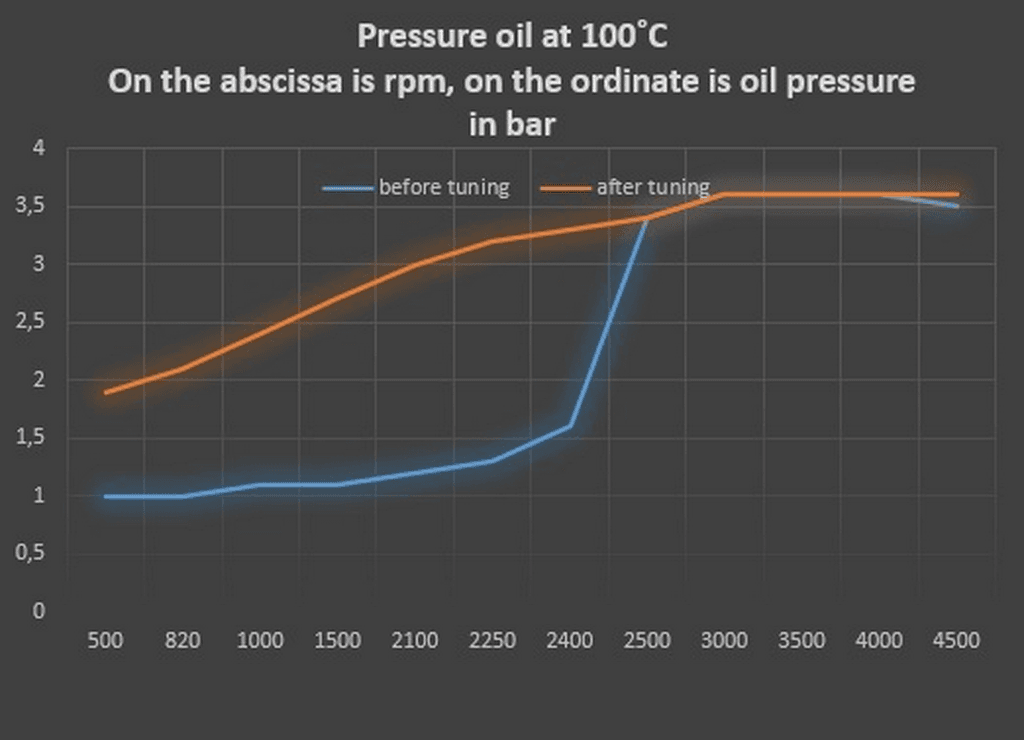
The blue line shows factory settings: up to 2000 RPM the pressure is only 1.1 Bar, and at 2400 RPM it is 1.5 Bar. This is dangerously low. The orange line shows pressure readings after our software modification — significantly higher and safer across all RPM ranges.
Our Service & Warranty
Goal: Increasing oil pressure extends engine life. It will not restore damage already caused by low pressure — the earlier you act, the better.
- The warranty covers only the oil pressure change
- No other software manipulations are performed
- The modification is possible only on unmodified, unencrypted software
- Engine defects resulting from low oil pressure are not covered
- The ECU must be fully functional and unmodified
- The warranty is void if others interfere with the ECU
Practical Tips
- If your car is under warranty — make the change at your own risk, but act before engine damage occurs
- EA897 EVO (2014–2019): engines typically last ~100,000–180,000 km before failure
- EA897 EVO3 (after 2020): ~150,000–200,000 km
- After the warranty expires (usually 100,000 km) the manufacturer refuses coverage
- If you have serviced only at authorized centers and are under 8 years or 180,000 km — you may qualify for a manufacturer discount (15–xx%)
- Fight for a higher discount — there is no written rule, but it works
Preventive Maintenance
- Replacement of crankshaft bearings (preventive)
- Oil pressure correction via ECU remap
- Regular oil changes with correct viscosity and quality
- Use only high-quality diesel fuel
🚗💨 The EA897evo engines and their evolutions are technologically advanced but suffer from serious oil pressure-related issues. If you own a car with such an engine, regular maintenance and oil pressure correction are essential to avoid fatal and extremely expensive damage.
Book an Appointment Now